
C'est le nombre de visiteurs depuis que j'ai installé le compteur en janvier. Merci à vous.
Is the number of visitors since I've installed the meter in January. Thanks to you.
Ist die Zahl der Besuch seitdem ich im Januar den Zähler installiert habe. Vielen Dank an Euch.
Friday, April 29, 2005

Thursday, April 28, 2005
100 years of teaware in Taiwan
Mentioned in my posts of January 20 and January 29, 2005, you can see this exhibition online now. The first page is in Chinese, but the rest is both in Chinese and English.
You may notice that all the older artifacts from the Qing Dynasty belong to teamaster Chi Jung Sien, also known as Teaparker. What nice pieces!
The modern Taiwanese teasets show a return to nature with their imitation of wood, bamboo, wood, plum... Not a very modern feeling, actually. Except maybe this... thing, which deserves a place in a modern art museum. Taiwanese artists seem to have missed on a modern trend: zen, simple and beautiful forms. Another inspiration is missing: classical Chinese teapots. I smell some taiwanese politics here, or just a bad selection from the museum, which, otherwise, is doing a very good job bringing so many treasures to the web.
You may notice that all the older artifacts from the Qing Dynasty belong to teamaster Chi Jung Sien, also known as Teaparker. What nice pieces!
The modern Taiwanese teasets show a return to nature with their imitation of wood, bamboo, wood, plum... Not a very modern feeling, actually. Except maybe this... thing, which deserves a place in a modern art museum. Taiwanese artists seem to have missed on a modern trend: zen, simple and beautiful forms. Another inspiration is missing: classical Chinese teapots. I smell some taiwanese politics here, or just a bad selection from the museum, which, otherwise, is doing a very good job bringing so many treasures to the web.
Wednesday, April 27, 2005
Ceramics from South Korea
Read in the Asian Wall Street Journal of April 15-17, 2005. The article, Return to Form, provides 3 links to discover more about South Korea ceramics:
- World Cermamic Biennale,
- KwangJuYo,
- Tong-In Gallery.
After looking at the 3 sites, it struck me that they all use the same web site designer! Apparently, the prices are quite expensive. This emphasis on design should be noted in YingGe, Taiwan's pottery town. I really recommend a visit of its ceramics museum when you come to Taiwan.
I reported in January about the museum's second tea set competition. You have to look at that link! With two clicks, you'll find more interesting tea sets than after one hour of browsing on the 3 Korean links. My favorite set is the Bronze medalist. From the picture it is not so clear, but the round tea set is not only a lamp, but also a water fountain! This artist's works are for sale in the museum's shop. Count approxiamtely 50,000 New Taiwan Dollar for a similar lamp/fountain.
- World Cermamic Biennale,
- KwangJuYo,
- Tong-In Gallery.
After looking at the 3 sites, it struck me that they all use the same web site designer! Apparently, the prices are quite expensive. This emphasis on design should be noted in YingGe, Taiwan's pottery town. I really recommend a visit of its ceramics museum when you come to Taiwan.
I reported in January about the museum's second tea set competition. You have to look at that link! With two clicks, you'll find more interesting tea sets than after one hour of browsing on the 3 Korean links. My favorite set is the Bronze medalist. From the picture it is not so clear, but the round tea set is not only a lamp, but also a water fountain! This artist's works are for sale in the museum's shop. Count approxiamtely 50,000 New Taiwan Dollar for a similar lamp/fountain.
Tuesday, April 26, 2005
Pu-er, humidité et vieillissement
Un article intéressant sur le Pu-er chez TEMAE. C'est le thé chinois le plus difficile à apprécier, à mon avis. J'en bois trop peu, à vrai dire, car je réserve mon pu-er cru et sauvage pour les grandes occasions seulement. Cet article m'a mis l'eau à la bouche, et je vais m'en faire quelques feuilles.
Pour en savoir plus sur les pu-er, je vous recommande aussi ce bon site non commercial en anglais.
Dans l'article, Jean-Claude écrit que :"Les Pu-er compressés se conservent très facilement, à l’abri de l’humidité surtout". Entièrement d'accord avec la première partie de la phrase. Mais l'humidité n'est pas forcément négative. Elle accélère le processus de vieillissement de ce thé, et peut donc le bonifier plus rapidement si on fait attention. Attention aux odeurs et à ne pas trop varier le degré d'humidité. Cuisine et salle de bains sont à proscrire. La bonification marche mieux si on entrepose suffisamment de pu-er ensemble pour que se crée un 'nuage' d'odeur de pu-er. Des régions humides comme Taiwan (chaud) et la Bretagne sont donc de bons endroits pour faire vieillir le Pu-er. Il n'est même pas besoin de le mettre dans un récipient spécifique. Laissez juste le pu-er dans son papier d'emballage d'origine.
Pour en savoir plus sur les pu-er, je vous recommande aussi ce bon site non commercial en anglais.
Dans l'article, Jean-Claude écrit que :"Les Pu-er compressés se conservent très facilement, à l’abri de l’humidité surtout". Entièrement d'accord avec la première partie de la phrase. Mais l'humidité n'est pas forcément négative. Elle accélère le processus de vieillissement de ce thé, et peut donc le bonifier plus rapidement si on fait attention. Attention aux odeurs et à ne pas trop varier le degré d'humidité. Cuisine et salle de bains sont à proscrire. La bonification marche mieux si on entrepose suffisamment de pu-er ensemble pour que se crée un 'nuage' d'odeur de pu-er. Des régions humides comme Taiwan (chaud) et la Bretagne sont donc de bons endroits pour faire vieillir le Pu-er. Il n'est même pas besoin de le mettre dans un récipient spécifique. Laissez juste le pu-er dans son papier d'emballage d'origine.
Thursday, April 21, 2005
Wednesday, April 20, 2005
Spiritualiteet, Papst Benedict der XVI.
So was ist seit langem nicht passiert: ein deutscher Papst! Teefreunde, laßt mich, ein Lutheraner, ein paar Worte zu diesem Ereignis schreiben. Viele dachten es kommt jetzt einer aus Lateinamerika. Mir wäre ein Chineser lieb gewesen um die chinesische KP zu stürzen und 1,3 Milliarden Leute zu befreien.
Mit der Wahl eines Deutschen zeigt die katholische Kirche, daß sie Ihrer europäischen Wurzeln treu bleibt. In einer Zeit wo die Kirchen Europas sich leeren und Europa orientierungslos eine Verfassung ohne Grenzen, ohne Gott (?) ratifiziert (oder nicht, siehe Frankreich), gibt die katholische Kirche Europa eine neue Chance zu sich zu finden. Mehr darüber können sie vom neuen Papst selber lesen!
Mit der Wahl eines Deutschen zeigt die katholische Kirche, daß sie Ihrer europäischen Wurzeln treu bleibt. In einer Zeit wo die Kirchen Europas sich leeren und Europa orientierungslos eine Verfassung ohne Grenzen, ohne Gott (?) ratifiziert (oder nicht, siehe Frankreich), gibt die katholische Kirche Europa eine neue Chance zu sich zu finden. Mehr darüber können sie vom neuen Papst selber lesen!
Advice: Chinese Iced tea
Summer is coming! It's getting hot in Taipei and I long for cool drinks again.
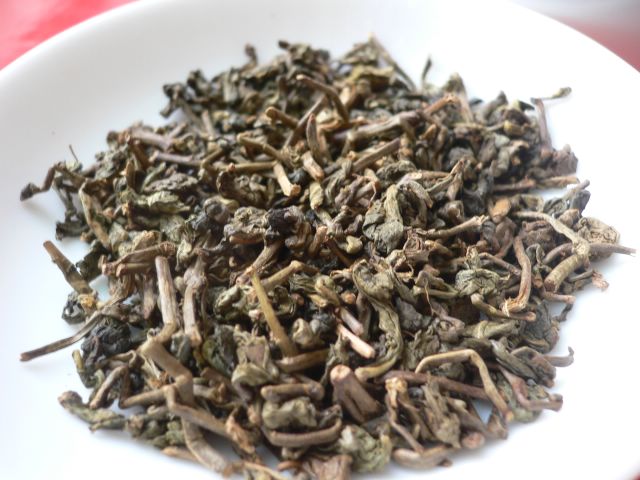
I remembered an advice from Teaparker, tea master Chih Jung Sien: buy tea branches and make iced tea ; it's cheap, sweet and refreshing. Last week I bought such tea branches from a street tea vendor on the market. The price was NTD 50 (1,7 USD) for 300 gr! Basically, these are the branches and leaves that are sorted out of regular loose tea. (Below is a picture of such a tea).
The trick for the brew is to use a lot of leaves and make several very short infusions. This will prevent the bitter taste to come out, while the large tea quantity ensures you get sufficient flavor. Actually, it tastes quite like a cold canned oolong tea sold in convenient stores around Taiwan. Just better! Up to you to add sugar or not. I didn't feel the need to do so.
There is another trendy way to prepare iced tea in Taiwan these days. It is called leung pao, or cold brew. Just put your regular loose tea in half a liter of cold water and wait approximately 5 hours. Et voilà! Even Wang De Chuan has a leaflet how to make cold brew.
But tea master Chih Jung Sien doesn't approve this trend. "Tea has been around for so long, if it were a good way to make tea, the Chinese would have invented it much earlier." My experience of cold brew is that you get good tasting cold tea, but it comes at a price. You would get more good taste and tea if you used gong fu cha to drink it warm. With cold brew, you don't extract all the flavor you could from your tea leaves. It's like throwing away half of your tea away.
I can understand tea vendors would like you to consume their good teas in summer, but a consumer with limited financial resources is probably better off following our first advice!
I remembered an advice from Teaparker, tea master Chih Jung Sien: buy tea branches and make iced tea ; it's cheap, sweet and refreshing. Last week I bought such tea branches from a street tea vendor on the market. The price was NTD 50 (1,7 USD) for 300 gr! Basically, these are the branches and leaves that are sorted out of regular loose tea. (Below is a picture of such a tea).
The trick for the brew is to use a lot of leaves and make several very short infusions. This will prevent the bitter taste to come out, while the large tea quantity ensures you get sufficient flavor. Actually, it tastes quite like a cold canned oolong tea sold in convenient stores around Taiwan. Just better! Up to you to add sugar or not. I didn't feel the need to do so.
There is another trendy way to prepare iced tea in Taiwan these days. It is called leung pao, or cold brew. Just put your regular loose tea in half a liter of cold water and wait approximately 5 hours. Et voilà! Even Wang De Chuan has a leaflet how to make cold brew.
But tea master Chih Jung Sien doesn't approve this trend. "Tea has been around for so long, if it were a good way to make tea, the Chinese would have invented it much earlier." My experience of cold brew is that you get good tasting cold tea, but it comes at a price. You would get more good taste and tea if you used gong fu cha to drink it warm. With cold brew, you don't extract all the flavor you could from your tea leaves. It's like throwing away half of your tea away.
I can understand tea vendors would like you to consume their good teas in summer, but a consumer with limited financial resources is probably better off following our first advice!
Tuesday, April 19, 2005

Subscribe to:
Posts (Atom)


 Posts
Posts


