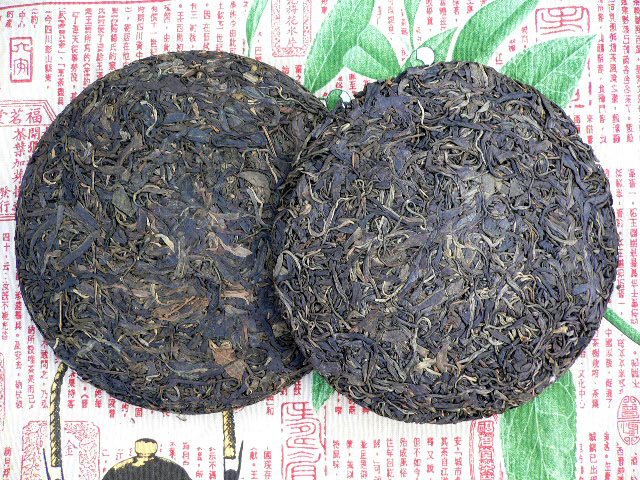
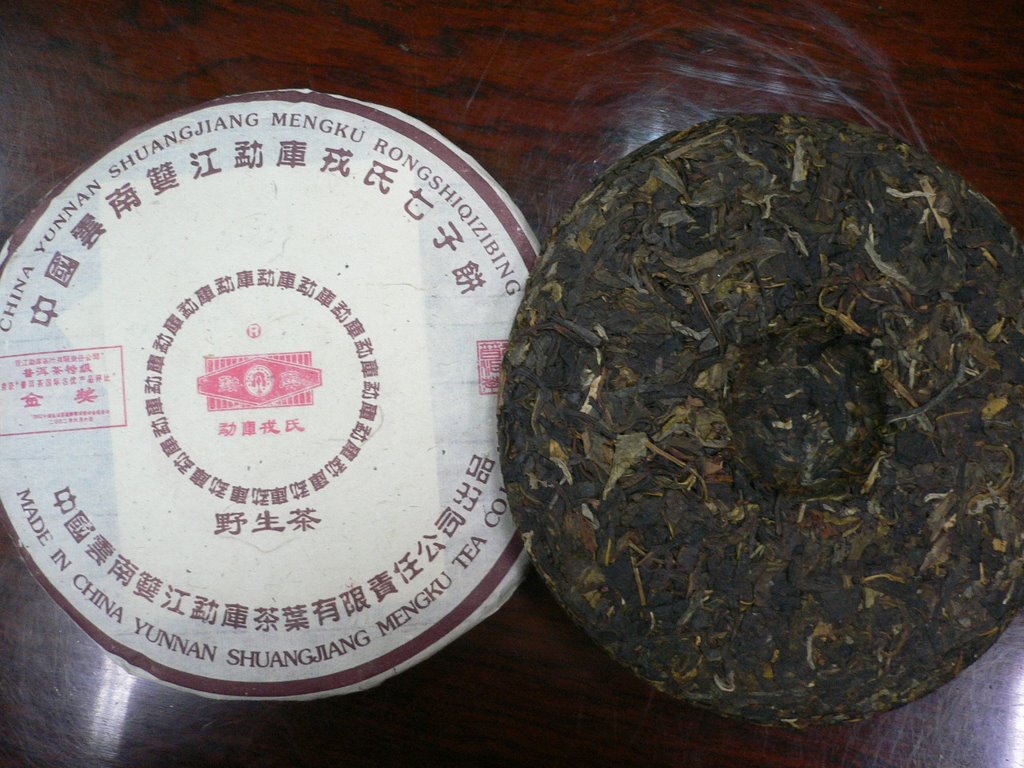
Last year, I received a 2002 (or 2003?) Mengku cake from the Shuangjiang Mengku Tea Co. This is one of the big and increasingly famous new puerh factories. It's located in the south west of Yunnan, close to the border with Burma. This is a picture I made last year in June.
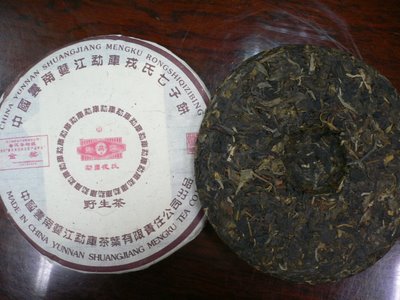
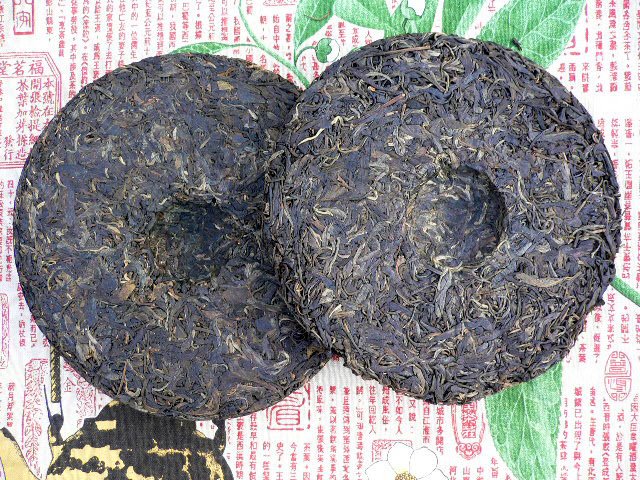
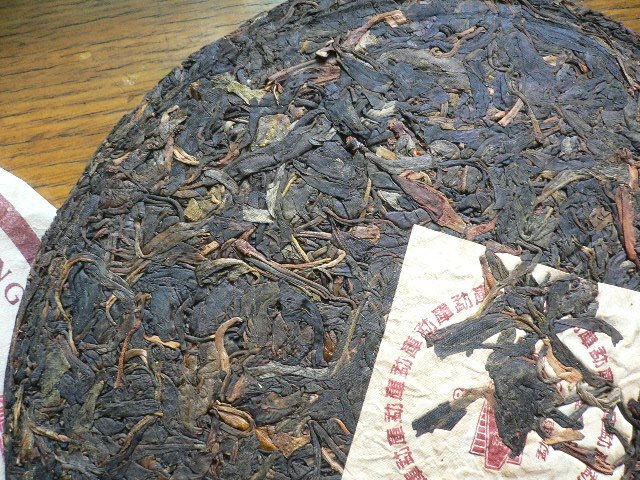
And this is a picture of the actual cake I have from the same batch as the one above. I took this picture last week. Maybe you'll notice that the greener/yellow leaves have turned brownish within the 2 summers at my house. It doesn't seem very apparent on the pictures, but for I found the difference quite striking.
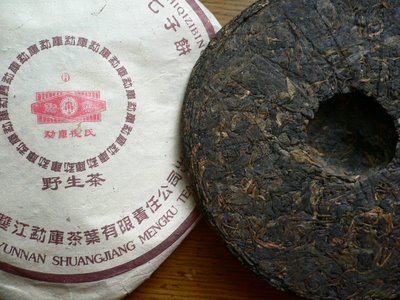
Here is a better close up of the upper face of the cake. It's too tightly pressed and the leaves don't shine, but it still looks quite OK on a first quick look.
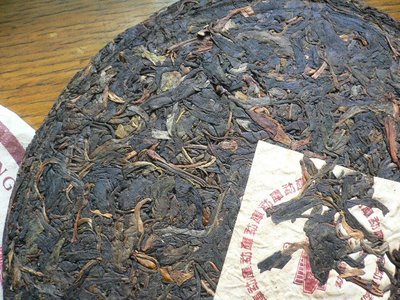
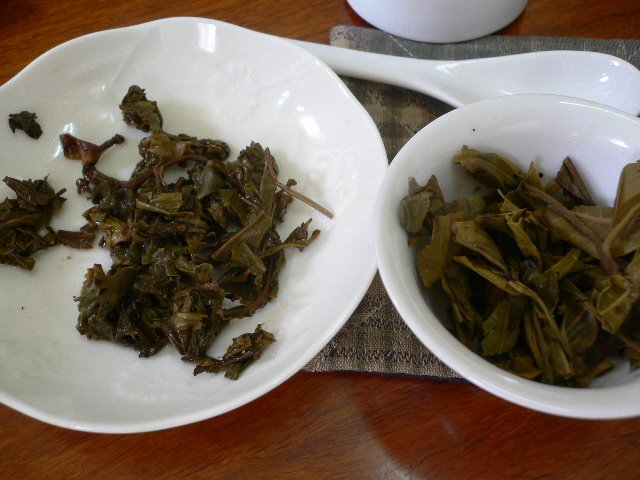
Too curious, I decided to taste it for the first time last week. The result was very disappointing. Despite its aged looks, it was still very astringent and bitter with a relatively flat finish. Its leaves (below left) even failed to open properly after a 5 minutes infusion. The leaves of a Spring 2006 Mengku cake on the right show how they should have opened. (- I will comment that other cake some other day.)

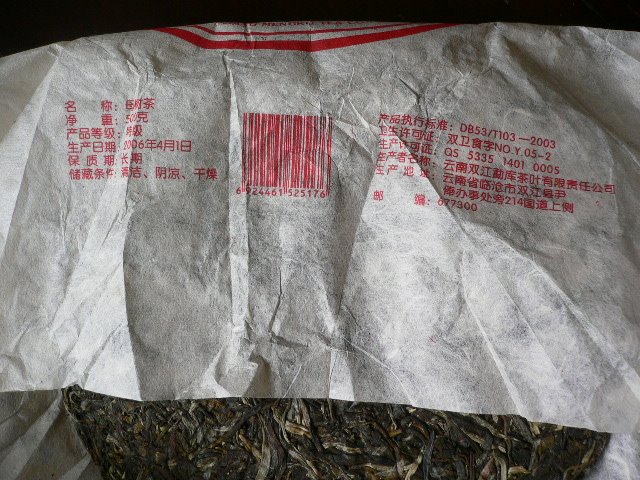
Besides, the leaves are not even wild, despite the wrapping paper saying so! This is another example of deceiving looks. Nothing can replace the actual tasting. Also, it's good to have a high benchmark of real wild puerh (at least in your memory) to know what excellent puerh is supposed to taste like.
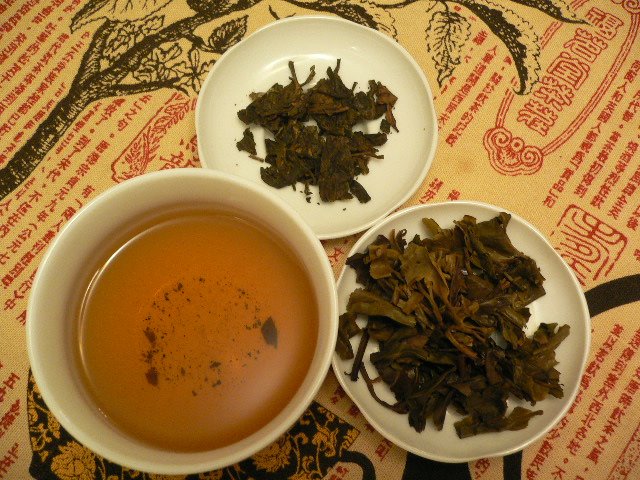
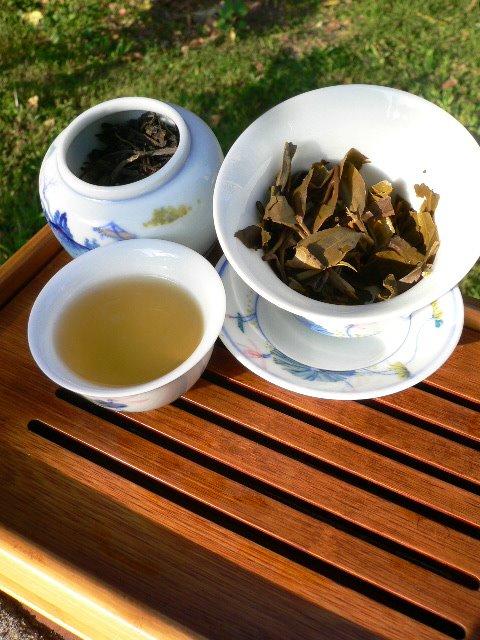
Update: Following comments by a reader, I've added this picture of a long brew I just made again (sorry for the darkness of my indoor lights, but it's already night in Taiwan):
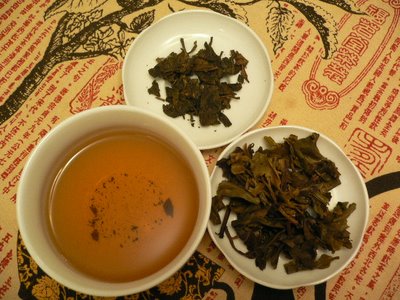
Last time, the leaves were flaked by a friend, so I wanted to brew it again to make sure about their (lack of) quality. I was careful during the flaking, but some breaks still occured because this cake is very hard pressed. I was then careful only to take big, whole dry pieces. The result is quite consistent with before: all I get in my pot are very small leave pieces, however they are more open this time. For this brew, I was only able to find 1 leaf that was somewhat whole. And this is not a good sign as cut leaves produce more astringency.
Looking at the color of the brew, I don't think it's as young as 2004. 2002/03 seems more correct. Is it a fake Mengku? Maybe. At least I'm quite certain it's a fake wild puerh. Since wrapping papers are so often copied, I find it more interesting to discuss the tea itself than the paper.
I agree that my cake is different from the one this reader bought. His seems better pressed (not too hard and not too loose) and the leaves are more whole. However, I think that his is younger from the color of the brew and of the dry cake. This darkened color of my cake was actually the reason I wrote this post. I found it interesting to show the rather quick aging of this puerh cake in my Taipei apartment. And another interesting lesson we can see is that age is less important than the primary quality of the leaves.
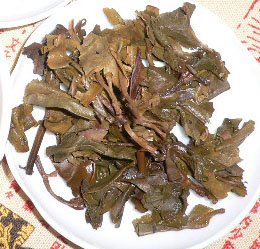
Update 2: Here is a close up of the open leaves that I shot with a flash last night (I cropped out the rest because the flash at close distance doesn't make beautiful pictures):
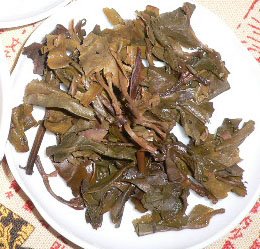
So, I hope this sheds a new light on how broken the leaves are.

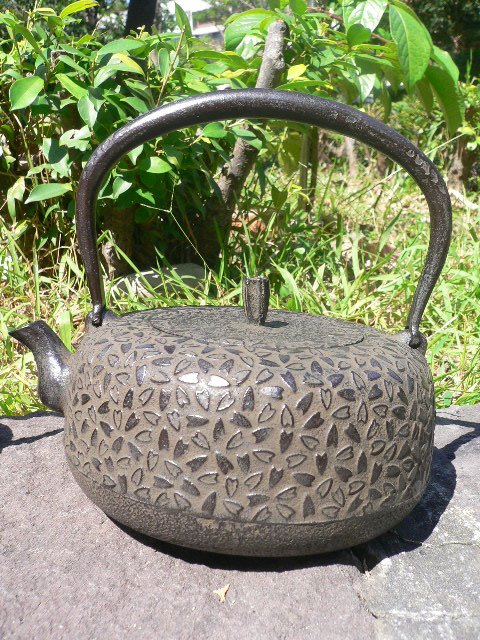
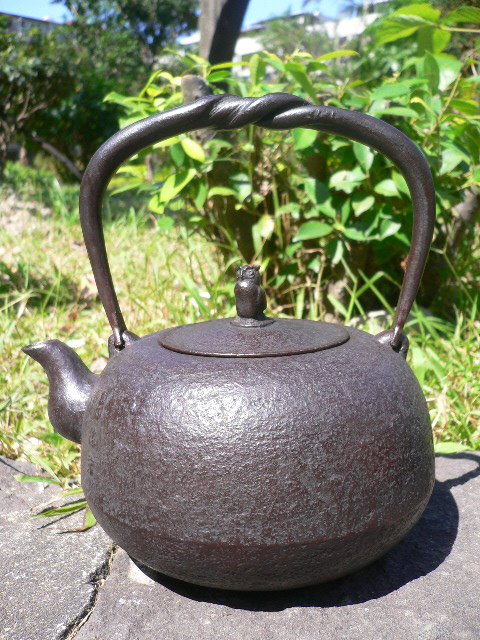
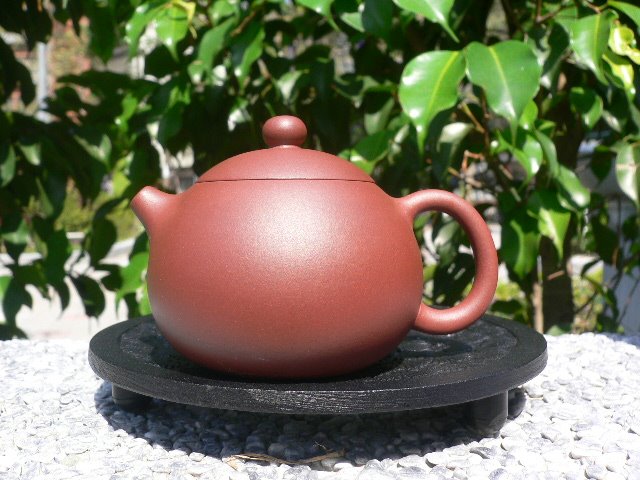 Ses caractéristiques sont donc très semblables (vous pouvez relire l'article). Sa petite taille fait qu'elle conviendra plutôt à des thés aux feuilles petites ou morcellés et infusables de nombreuses fois. Bref, je vais en faire ma nouvelle théière à vieux puerh cru. Mieux vaut pas avoir de taille 4x4 pour ces thés-là. Un petit moteur qui ne consomme pas trop vaut mieux pour économiser ce concentré de carburant!










 Posts
Posts


