Friday, December 21, 2012

Comparing Yunnan Dian Hungs

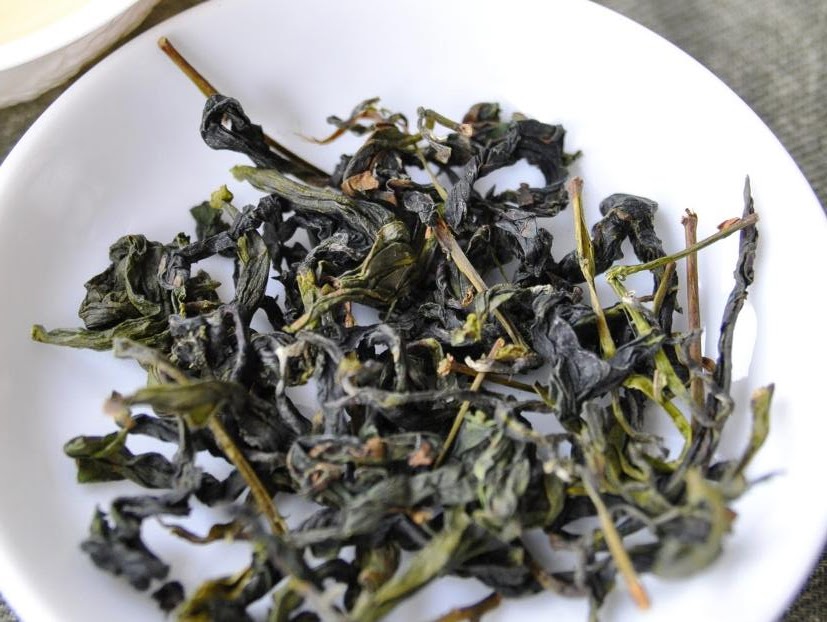
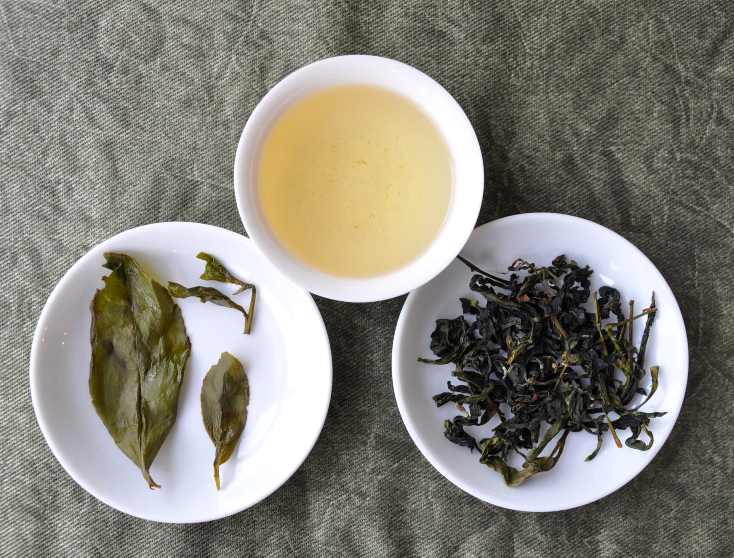
Today, Neil, a visiting tea friend brought his favorite red tea, a Yunnan golden tip Dian Hung (left on both pictures). This gave us the idea to compare it side by side with the wild Dian Hung from my selection.

Visually, these 2 teas look quite different already. Neil's is much more golden and appears more tippy. However, a closer examination shows that my buds (right) are thinner, smaller and more concentrated. Also, my Dian Hung is full of 'hao', tea hair. Like for a Bi Luo Chun, this hair, fur is a sign that the tea was picked young. The difference in appearance makes it obvious that these 2 teas are not from the same tea tree (cultivar). In fact, my Dian Hung uses wild, old, high mountain puerh tree material.
We brewed both teas with 2 white porcelain competition sets for 6 minutes approximately. Neil's Dian Hung (left) had a slightly less clear, less bright tea brew. The leaves turned greenish. This was reflected in the scent of this tea. It still had a 'greenish' smell that shouldn't be there in a red tea. My wild Dian Hung (right) had a nice shine and the wet leaves were still red. The flavors of my Dian Hung were very clean and bright.

The taste difference was even more obvious. Neil's Dian Hung tasted sweet (good!), but flat. Nothing much else was happening in the mouth in terms of aftertaste. For my wild Dian Hung, Neil found it had a touch of astringency, but not a bad one, he added. But what it had was energy, power, life, you name it! It's a tea that continues to create many strong feelings in the mouth, after it's swallowed.

Neil asked me about what vocabulary to use to describe a good tea experience (when you are with tea friends). It's can be quite difficult to find the right words. Too detailed, they can sound like a medical exam (salivation glands are activated, blood rush to the heart...) and too poetic they will border the mystical and weird (the harmonious energies of nature transport me into another state of mind...) What I recommend is to let other drinkers talk first and try not to influence them with your own take. And be honest. 

Neil and I had tasted my wild Dian Hung last year. It's from spring 2011, but I find that the aromas are more concentrated and finer now. And with the quality of its material, it's a tea that will continue to evolve well (if properly stored). With winter starting today, this is a tea I will often brew in the coming cold months...

Thursday, December 20, 2012

La douceur de l'hiver ensoleillé

Cultivar: luanze (qingxin) Oolong
Origine: Alishan, Changshu Hu
Elévation: 1600 mètres
Récolté à la main le 2 octobre 2012.

C'est le Oolong 'fin' de cet hiver. Je profite d'une journée pleine de soleil pour le préparer en théière en zhuni d'Yixing pour le verser dans mes coupes 'dragon' de De Hua.
 L'infusion est particulièrement transparente et claire. La couleur jaune brille comme un soleil dans le ciel frais hivernal.

Les fragrances sont fines et fraiches. De l'herbe verte fraichement coupée, de la lavande, du vétyver... Au goût, on ressent d'abord le moelleux, le sucré avant la fraicheur. Il y a aussi un petit côté acidulé qui renvoie à des fruits d'hiver comme les oranges. Je remarque aussi que ces impressions en bouche sont pures et très agréables, mais il s'en dégage aussi un sentiment de puissance, de force. En effet, le goût est 'épais' et riche tout en êtant si frais et fleuri. C'est la particularité des Oolongs de haute montagne, leur dualité.

Cette impression paradoxale de force et de légerté vient de leurs feuilles. Certaines sont très grandes (car elles poussent doucement en montagne) et d'autres sont de petits bourgeons aux arômes si subtils. Et le terroir de Changshu Hu à Alishan accentue cette sensation, car les Oolongs qui y poussent sont particulièrement puissants. La particularité de l'hiver est plus de moelleux qu'au printemps.
L'arrière-goût est longtemps présent, gouleyant et doux. On ressent la douceur du soleil de montagne en hiver. Une clarté nous pénêtre et accompagne notre douce attente de Noël.

Wednesday, December 19, 2012

2012 Top 10 articles

As we approach the end of the year, here are the 10 articles of 2012 that registered the most views. They give us a glimpse of what interests you most.

10. Top Ali Shan Oolong - Spring 2012 - One of my best high moutain luanze Oolong in my selection this year. Tastes almost like Da Yu Ling!
851 views

9. Unleash the fierce dragon -  2 Cha Bu with flying dragon as symbols for the powerful creativity inside each one of us.
951 views

8. Minyao mini coupes qinghuaci - Petites et mignonnes, les vieilles coupes en porcelaine bleu sur blanc.
1004 views

7. Home vs. warehouse raw puerh storage - Taiwanese storage of a 6 years old puerh from Lincang can vary greatly.
1037 views

6. Old puerh, plain mini cups, new combination - Using old cups with my mid 1980s raw puerh makes a lot of sense!
1078 views

5. Baozhong 'forêt subtropicale' et porcelaine 'orchidée' - Le Wenshan Baozong le plus classique de ma sélection et un set de porcelaine moderne qinghua.
1091 views

4. How to appreciate a teapot from a tea drinker's perspective - Functional beauty illustrated by a 1980s top grade Yixing zhuni teapot!
1122 views

3. How to appreciate a teapot. The basic and the potter perspectives -  Trying to explain beauty to the untrained eye.
1145 views

2. Yixing modern zhuni Long Dan teapot - A dragon egg shaped teapot for high mountain Oolong. This teapot is sold out now. Next year, I will try my best to find more Yixing teapots from different makers.
1193 views

1. A jam session: Earth and Fire cups by David Louveau - free and unconstrained works of art and nature. These cups work best with shu puerh.
1323 views

Friday, December 14, 2012

Tsui Yu Baozhong (+ filtre à thé offert à tous mes lecteurs!)


Durant la période qui précède Noël, il y a mille et une choses à préparer, acheter, emballer, cuisiner... Le temps vient facilement à manquer pour préparer un bon thé ou de lire un article sur un blog à thé. Aussi, pour vous remercier de m'accorder votre attention pendant quelques lignes, je vais vous offrir mon filtre à thé 100% bio, durable et équitable, durant la lecture de cet article!

Mais commençons d'abord par ce thé:
- Cultivar: Tsui Yu (Jade Oolong)
- Récolté à la main le 1er octobre 2012.
- Origine: Wenshan, nord de Taiwan
- Process: Baozhong de style 'forêt subtropicale', c'est à dire avec une oxydation un peu plus poussée et un ample séchage.
 
Pour le préparer, j'utilise ma théière moyenne (17 cl) en porcelaine qingbai. Mais comme j'aime bien mêler le moderne et l'ancien, je la pose sur cette assiette creuse de la dynastie Qing. Elle fait office de bateau à thé aux motifs de fleurs qinghua:

 
La théière préchauffée, j'y mets ces 4 grammes de Baozhong, verse de l'eau juste bouillante et laisse infuser quelques (3-4) minutes. Comme il s'agit de le thé le moins cher de ma sélection actuellement, je veux le tester dans des conditions proches d'un 'thé de bureau', d'un thé qui accompagne la vie au lieu d'être central. C'est pourquoi j'utilise ici ma cruche qingbai (disponible à nouveau après une longue absence). La cruche permet de garder le thé chaud quelques minutes de plus que dans les coupes chantantes ; et on n'a pas besoin d'attendre d'avoir la coupe vide pour refaire une infusion.

Pour la première infusion, je garde l'habitude de verser dans les coupes et dans la cruche au lieu de tout déverser dans la cruche:  

Cela a pour conséquence de rendre petits bris de thé visibles au fond de la tasse. Personnellement, ils ne me gênent pas vraiment, car il ne s'agit pas de poussières de saleté. Après tout, on boit bien de la poudre de thé (matcha)!

Mais je conçois qu'on puisse préférer son infusion bien clean. Cependant, je n'aime pas utiliser les filtres qu'on trouve dans le commerce. D'une part, je n'aime pas mettre le thé en contact avec du métal, ou bien trouve que ces filtres sont difficiles à bien nettoyer.
Le filtre que j'utilise et que la nature nous offre est la gravité! Quand on utilise une cruche, les bris et poudres de thé descendent au fond de la cruche. Il suffit de verser doucement dans les coupes pour obtenir cette belle infusion jaune-verte.

Les odeurs de ce baozhong sont mêlées de jasmin et de forêt subtropicale. Elles me font aussi penser aux odeurs de magasins à thé taiwanais traditionnels où l'on torréfie du Oolong à l'arrière-boutique. La légère torréfaction de ce Baozhong est encore récente, et c'est pourquoi je l'ai entreposé quelques minutes dans ma jarre qinghua. Cela a permis d'arrondir les angles de ce Baozhong. Le goût est moelleux et simple. La différence principale avec les haut de gamme est qu'il a moins de finesse et laisse un arrière-goût un peu plus lourd.
Les feuilles sont assez petites et ont trouve des traces d'oxydation sur les bords. Les tiges ont été triées. J'en ai tiré 3 infusions très satisfaisantes sans grands efforts.

Tuesday, December 11, 2012

Time for an Old Hung Shui Oolong

The Christmas holiday season is a good time to enjoy an exceptional tea that marks the occasion. So, today, to fight the grey and cold weather with warmth, I chose my 1990 San Hsia Hung Shui Oolong. For such a tea, I dedicated 2 hours and a full scale Cha Xi.

You'll notice that the leaves aren't tightly rolled anymore. As they age, the leaves tend to open up a little.
Charcoal backup
I even used charcoal to make a fire in my Nilu to heat my water. I recently asked a tea friend how he feels the charcoal boiled water impacted his tea. He wasn't sure if he felt a difference in the taste of the water, he said. However, the simple fact of using a fire instead of electricity is transforming the whole tea experience, he told me. It feels more authentic, natural ; and it heightens your attention, because a fire can be dangerous if you are careless.
With a small fire, it's best to have a small kettle, otherwise the water takes too long to boil. That's why I switched from my silver kettle to this white clay kettle. Its  walls are particularly thin, so that it heats water quickly. The cover feels so light and fragile! And the handle is hollow, which helps it to remain cool.
For my 1990 Hung Shui Oolong, I pick the small zhuni teapot. Since the tea is very high quality, I don't want to loose any flavor with a more porous clay. The pour is quite strong, since the leaves are old and need to wake up. 
The tea has a beautiful brown color and is completely clear. Thanks to the clay kettle, it feels even older, more earthy than with my tetsubin or my silver kettle. Also, it is much smoother and doesn't have the metallic 'zest' of my other kettles. The old sand scents of the clay mix well with the tea, but tend to make it a little dull. Luckily, the zhuni teapot helps restore brightness and sharpness to it all. I should use the kettle more often to get rid of this old smell...
The sweet taste seems to last forever... This is tea bliss! It seems so miraculous that a 22 years old Oolong should taste so pure, rich and sweet. It warms my body and lifts my spirits.
The leaves open up very well inside the teapot. They even show signs of green. This Hung Shui Oolong has only been roasted once, 22 years ago. And since then, it has rested and aged well protected against air. It started in a porcelain jar and now I use a small pewter tea caddy.
With an old tea, it feels like reminiscing about happy old Christmas times, the innocence of youth, the sweetness of a cozy winter life...
Merry Christmas Season!

Thursday, December 06, 2012

Un Oolong de l'Avent


Pour fêter la Saint Nicolas, je prépare ce Cha Xi avec un Oolong chaleureux, doux et gourmand. J'opte pour ma Concubine Oolong organique de Feng Huang de l'hiver dernier. Cela fait plusieurs mois maintenant que ces feuilles sont entreposées dans ma vieille jarre qinghua phoenix. Leurs fragrances continuent de s'affiner, de s'ouvrir et de se concentrer dans cette jarre. Elles sont mi-épices, mi-alcool.
J'ai beau bien connaitre ce thé, je suis tout de même surpris par ma première gorgée. Il s'est bonifié au-delà de mes attentes! Quelle finesse, quelle puissance, que de moelleux dans ce doux breuvage! Est-ce l'ambiance de Noël créée par ce Chaxi, toujours est-il que je crois discerner des odeurs de cannelle, de fruits rouges, de peau d'orange séchée qui m'évoquent le vin chaud du marché de Noël de mon enfance...

En même temps, le thé reste si léger et si pur en bouche. Il reste présent par ses fragrances et son after taste. 

Mon Cha Bu est un calendrier de l'Avent en tissu (réalisé par ma mère pour ses 2 petits enfants)! Chaque soir, j'y glisse 2 petits chocolats dans la poche qui porte le numéro du lendemain ; et chaque matin, mes enfants viennent y trouver leur surprise.

C'est ainsi que je leur transmets une de mes traditions et maintient un lien affectueux avec leur grand-mère. Ce n'est pas toujours facile, surtout quand on vit expatrié, loin de sa famille. Les fêtes de fin d'année pourraient engendrer des moments difficiles, des sentiments de séparation.
Or, là est justement un bienfait d'un bon Chaxi: il vous recentre sur l'ici et le maintenant. L'esprit de la Saint Nicolas n'est pas seulement présent en Alsace. Il est ici et maintenant, dans cette coupe de thé, dans les couleurs rouges festives de la théière en zhuni, des coupes blanches comme neige, de ce Chabu de l'Avent...
Et le sourire barbouillé de chocolat de mes enfants est le témoin de leur impatience (universelle) avant Noël.
Le Chaxi est un monde en harmonie où l'on se sent bien, car l'on a tout pour réussir son thé. C'est un 'chez soi' unique, personnel et toujours changeant, comme la vie. Nous y sommes maitre de notre théière, mais en même temps au service du thé et des convives. Maitre de notre destin et au service de nos prochains, de nos enfants.
 Joyeuse Saint Nicolas!

Tuesday, December 04, 2012

Sharing some Gift Ideas

Christmas is a time of generosity and gift giving. In this spirit, instead of writing about my teas or teaware, I would like to share some other recommendations:

- Renaissance music by Doulce Mémoire. Their very old music sounds sometimes grave, sometimes light, but I feel it always resonates very deep. Some of my best Cha Xi (with old puerh) are made with their music. I particularly recommend Le Concert Secret des Dames de Ferrare. (I had the opportunity to meet and become friend with the director and several musicians, thanks to their love of Oolong!)
  
- I enjoy giving a good massage to my wife with oils from the very new age, California based Gaia Perfumes. The descriptions are a little bit esoteric, but what counts is the purity of the ingredients and the loving dedication of Ani Adams, the parfumeur. (She loves tea and twice we exchanged our products!)
 
- Excellent quality olive oil from 7 Species in Israel. The quality difference is similar to the difference between High mountain Oolong from my selection and a cheap Oolong from a local retailer. Beware, high quality olive oil is addictive! (The company was founded by a tea lover and friend of mine.)

- Cast Iron cookware: I started using a blue Staub Cocotte this spring. We all know how a tetsubin improves water. Cast iron cookware can also improve food! The heavy, flat  iron lid with spikes increases the moisture of the food. What I like is to use the lowest temperature and let the vegetables or meat slowly cook. They keep their juice while cooking. Cooking ratatouille is so easy! (The company is from Alsace, where I'm originally from, but I don't have any connection to them, other being a satisfied user.) 

-If you want to discover Bali in depth and want to plan you own tour, then I recommend Discover Bali Indonesia. It was founded by my best childhood friend who lives there even longer than I live in Taiwan. He is as much dedicated and passionate about the island of gods than I am about tea! 

Friday, November 30, 2012

Ambiance noire et or pour vieux puerh

La saison d'automne est plus sombre dans mon coin thé pour 3 raisons. 1. Le soleil se lève plus tard et se couche plus tôt. 2. Il se lève et se couche plus au sud, si bien que ma véranda orientée vers le nord ne reçoit plus aucun rayon de soleil. 3. Le temps est plus nuageux et pluvieux actuellement.
Comme mes jarres remplies de thé n'ont plus à craindre le soleil, je peux placer mon meuble du côté de la fenêtre. Ce petit chambardement permet de briser les habitudes et d'expériementer de nouveaux agencements. Il correspond aussi à la saison froide, lorsqu'on devient plus casanier, où le confort du chez soi prime sur les envies de sortie. 
 A cette noire atmosphère, j'éprouve une envie de puerh chaleureux. Mon puerh en vrac des années 80 convient particulièrement bien.
 Un délice classique, sombre et envoûtant.
 A la lumière des bougies, la vue perd ses repères. Le goût et les odeurs en sont d'autant plus présentes...

Tuesday, November 27, 2012

Winter 2012 Rou Guei Baozhong

Cultivar: 3 years old Rou Guei tea trees
Origin: Wenshan, northern Taiwan
Harvested by hand on October 20, 2012.
Process: Unroasted Baozhong

Competition brewing to test it: 3 grams for 6 minutes.

The dry leaves appear quite big (bigger than qingxin oolong). The fresh green color is in line with today's lightly oxidized Baozhongs. The tea contains stems, because I purchased it so early in the season that the farmer hadn't had the time to take them away. (This keeps the price more reasonable and doesn't impact the tea much ; stems have a sweet taste, but little fragrances).

What makes this Baozhong special is the cultivar: Rou Guei (肉桂, Ròuguì, cinnamon). This cultivar comes from the Wu Yi mountains (China) and is currently among the most popular there. As its name indicates, what distinguishes these leaves is not the taste, but its scents. The dry smells are very fresh, green, pure and sweet. It's a very nice and appealing scent.

The tea soup is clear and smells more like the mountain forest and rivers of Wenshan. The taste is mellow and fresh. But it also has a nice body. As I'm drinking this tea, the scents remind me of passion fruit! And the after taste now also reminds me of the feeling of cinnamon chewing gum (but not as strong, of course). It has the strength of a newly planted tea.

The edges of the big leaves show oxidation marks, as is the case with traditional Baozhong. The shape of these leaves is very different from qingxin Oolong.I

The farmer didn't want to sell all his unroasted harvest. He also wanted to keep enough to experiment roasting these leaves and taste the result. To support this spirit of R&D, I gave him some guidance by giving him a few leaves of original, roasted Wu Yi Rou Guei. It's great to see that Taiwan tea farmers are open to innovation and experimentation. Maybe in 10 years, Rou Guei will become as common in Wenshan as it is in Wu Yi!? There are always new teas, new processes that appear or travel from one tea region to another. It's one of the things that make tea so interesting. We all (farmers, tasters, drinkers...) keep on learning!