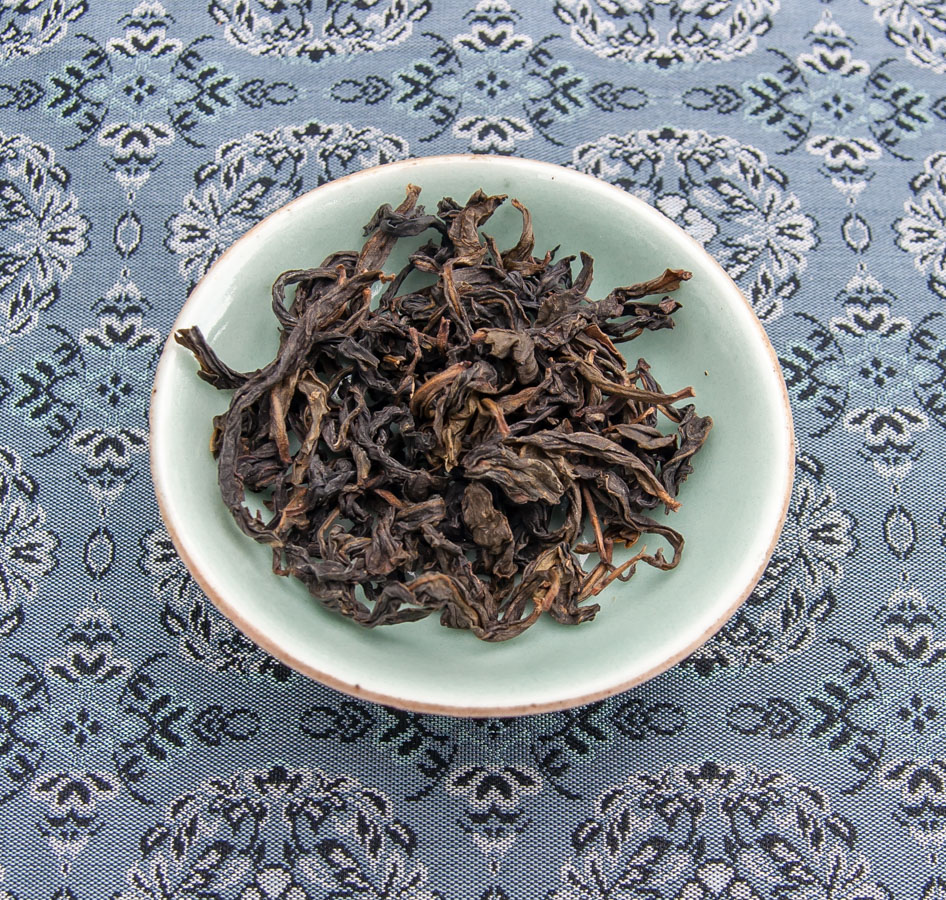
Saturday, June 18, 2016

Tasting the Spring 2016 Dong Ding Oolong Competition Winner

Dong Ding tea plantation
Last weekend was the big party at Lugu's Farmer Association. The winners of the world's biggest tea competition came to receive their prizes. Let me give you a quick update of this year's event. First, let's note that 6441 lots were presented to the competition. This competition happens in 2 steps.
1. The first tasting is made by judges from the farmer's association. They are mostly farmers and/or tea sellers. This year, they rejected 42% of the lots. The remaining lots were graded as 2 plum flowers (23% of the lots) or 3 plum flowers (19%) or were sent for further tasting to Taiwan's public Tea Reasearch Station (16%).

2. The second stage of the tasting is done by tea researchers who are public servants and not tea farmers. Anyway, the lots have a code so that nobody knows whose tea he/she is tasting. These judges decide who the top teas are (among the 16%) and they are ranked in this fashion:
- 1 winner,
- 10 runner ups,
- a winner ('gold medal') categoy with 125 lots this year (2%)
- a second ('silver medal') category with 387 lots (6%),
- a third ('bronze medal') category with 524 lots (8%).
This competition takes place for both the spring and winter harvests. The prized teas are packaged, sealed and their rank is clearly marked. Each lot weighs 20 jins (12 kg) and is then packaged into 40 packs of 2 x 150 gr (for the stage 2 teas) or 20 packs of 2 x 300 gr (for the stage 1 teas).

The farmers receive these boxes and 1 bag of the tea sample that remains after the various tastings. (That's why the farmers have to submit approximately 21 jins, but only get 20 jins back for sale. This extra tea that is returned to the farmer is what makes it possible to taste the tea before purchasing the sealed package. Many farmers provide this kind of tasting during this event. It's one of the big attraction: you get to taste so many different teas from so many different farmers in just one place.
Beautiful brewing demonstration
The winner in my hand!
You learn a lot from this event. One of the most surprising fact you'll learn (and that I reported in 2007) is that the Dong Ding competition winners don't come from Dong Ding at all, but come from higher altitudes. They still qualify for the competition, because Dong Ding Oolong refers more to the process (with roasting, aka Hung Shui) than to the location.

You'd expect the teas from the same category to taste similarly, but you find out that there are differences in oxidation and roasting level within the same category. Also, the origin of leaves impacts the taste. If they come from Alishan, Shanlinxi or TsuiFeng, this will impact the aromas.

To get a clear picture of what is quality, you need to learn from standards. So, the main reason for my trip to this event is that every buyer of 2 jins or more of competition Oolong has the opportunity to taste the winner and the 10 runner ups. But I was so lucky that day, that one of the very first table where I stopped by had 1 jin of the winning tea! The rest (38 boxes) had already sold out for 5000 USD per box of 2 x 150 gr! I didn't purchase it, but was very happy to hold this box!

The winner in my cup!
And I was even more happy (and lucky), because the farmer had a brew of this tea going on and I could taste it, brewed quite strong. (See my cup on the left). I learned that this tea comes from ShanLinXi. Its aftertaste is amazing with freshness and length.

It was a blessing to get such a clarifying statement about qualtiy and what to look for in a prized Dong Ding Oolong. But this also made my search harder, because now all the teas I tasted felt (and were) inferior to this winner! Nevertheless, I eventually found one that comes from Tsui Feng, located at a higher altitude and that has a very clean and pure taste, I felt. I purchased enough to be able to taste the 11 top teas brewed in competition style, 3 gram for 6 minutes, in this room:
First they let you smell the spent leaves in the covered cup and than you could take a sip by pouring some tea from the big white cup in a small cup using the steel spoon. These teas had a certain homogeneity, but you could still smell that the roast in the No 2 was stronger than for the winner, for instance. They were all excellent, of course, but only getting a few drops of each was making it difficult to appreciate them fully.

I was the last in my group to taste these teas and I was talking with the judge when I noticed that an assistant was starting to throw away the leaves to make space for a new brewing for the next group of tasters. I said: 'STOP, don't throw away these leaves. They have only been brewed once and they still have potential. Please give the the best 4 to me.' (I said in Chinese). They agreed and put them in the plastic foils they had used for the dry leaves!
I had hit the jackpot! I felt like the richest man in Taiwan, having the 4 best Dong Ding Oolongs of this spring in my bag! Now, I had to find a place where to brew them.
View on the left
So I drove from Lugu to Dong Ding mountain and stopped at this spot amidst tea plantations. This little table in front of an altar had a roof protecting me from the rain.
And that's where I enjoyed several brews of 3 of these teas.
It's a good thing I had planned to make some tea outdoors.
View on the right
Enjoying Dong Ding style Oolong on Dong Ding mountain, just next to a tea plantation, during a rainy day is an experience I'm not going to forget! The roast of the leaves felt good in this humid (and almost cool) weather.
I finished with the best. And I agree with the judges that it was superior. Its fresh, sweet, lingering and pure aftertaste is really impressive. It's an energy in your chest that goes up to the throat. A soothing effect.
And 3 grams are sufficient to obtain this result! Amazing tea.
My Chabu matches its environment perfectly and creates a deeper connection with this experience. Green for the color of the tea leaves, red for the color of happiness and gold for the color of the brew or the ink with which this tasting is printed in my memory!
With rain came also clouds and fog.
This fog is what makes spring Oolong leaves keep their freshness and light aromas as they grow. This fog contributed to Dong Ding's fame and it's the same fog we find nowadays in higher altitudes.

Wednesday, June 15, 2016

The Spring 2016 Oolong Harvests

Summary: The spring 2016 High Mountain Oolongs, the lightly oxidized Oolongs, the Baozhongs and the Hung Shui Oolongs are now all available!
The quality of this spring season is very good. While snow is quite common in the high mountains of Taiwan, this year it snowed even in Taipei and in the Wenshan area in late January. Then, the unusual cold temperatures in March and April delayed the start of spring harvests by 2 to 3 weeks in low elevations. This allowed the tea trees to rest longer and produce leaves with more concentrated flavors (even in lower altitude).
The long wait for the new spring harvests was frustrating, but it was really worth it! I have selected 28 new Oolongs & Baozhongs this spring, probably my record! This doesn't meant that everything I tasted was great and that you can purchase tea blindly in Taiwan this year. While last year was dry, there was some rain during the delayed harvest season, making some days better than others. -As I'm writing this article, I receive an e-mail from Matt telling me that my Alishan Qingxing Oolong is "absolutely delicious!"-  
This has allowed me to select a very broad range of Oolongs in terms of:
- cultivars: Jinxuan, Jade, Foshou, No. 209, SiJiChun, Qingxin and a mystery!
- locations: Wenshan, Mingjian, Zhushan, Feng Huang, ShanLinXi, ChangShuHu, Shibi, CaoLing, RuiLi, SanCengPing.
- and the highest peaks (near 2000 m or above): Tsui Feng, Tsui Luan, Lishan, Fushou Shan, Da Yu Ling 95K, 99K, 102K. (Inventory for these teas is very limited).
As you can see, the good news is that I was still able to find Oolong from Da Yu Ling! The less good news is that the laws of supply and demand are working as expected: fewer plantations in DYL means less supply and since the demand remains strong for this outstanding mountain, the prices have increased substantially.
Last week, Christopher from Germany and I tasted the delicious Oolongs from Lishan and the DYL 95K at an outdoor spot in San Hsia. It's quite fascinating that these 2 mountains, just a few kilometers apart, would produce Oolongs that can taste so different, with so much personality!
With these 2 top Oolongs, I set up a very special Chaxi: silver kettle, charcoal fire in the Nilu, a thin gaiwan, 2 light celadon singing cups, 2 pewter Chatuo, a qinghua plate and a copper JianShui.
DYL 95K
While Da Yu Ling plantations are stunning for their surrounding views, the Fushou Shan plantation itself is stunning with its fans and the very neat care of the tea trees. This use of modern technology and precision almost feels Japanese rather than Taiwanese! I'm very glad that I can propose so many great Oolongs for you to compare and enjoy! 
Fushou shan plantation
Note: all the tea pictures you see in my boutique are for 3 grams of tea brewed for 6 minutes in a standard, white porcelain brewing set. This lets you compare the teas as if you were a professional taster. Learn to read the tea leaves to choose your teas!

Tuesday, June 14, 2016

Une innovation parmi les Cha Tuo

Celadon cup and cha tuo by David Louveau
Un Cha Tuo est un support ou une sous-tasse sur lequel on place une coupe ou un bol à thé. Dans les temps anciens où le poterie se développa, le cha tuo était souvent fait dans le même matériau que le bol. Le cha tuo élève et donne plus de présence au bol ou à la coupe. Ses formes varient, mais elles sont surtout rondes ou en forme de pétales. Ainsi, la coupe de thé ressemble à une fleur, ce qui lui donne une beauté organique de type Art Nouveau. 
Silver Cha Tuo
L'utilisation de matériaux différents pour le cha tuo est devenue courante avec le développement de nouveaux savoir-faire comme la laque du bois ou la métallurgie.  
Cha tuo en fer
L'ajout d'un accessoire réalisé à partir d'un matériau différent sur un Chaxi apporte une touche supplémentaire qui donne de la diversité à la vue et au toucher. C'est aussi une manière de donner encore plus d'importance à l'élément central, le thé dans la coupe.
Cha tuo en cuivre avec bordure en argent
Le Cha tuo permet de protéger la nappe de thé (chabu) des éclaboussures et permet aussi de soulever sa coupe sans la toucher, le temps qu'elle refroidisse. Mais sa fonction principale reste de mettre la coupe et valeur et de créer de la beauté durant ce moment de bonheur qu'est la dégustation.
Cha tuo en étain
Les 5 métaux principaux de la Chine ancienne étaient l'or, l'argent, le cuivre, le fer et l'étain (dans leur ordre de valeur originale). Comme l'étain était traditionnellement bon marché, les Cha Tuo en étain devinrent très populaires à Chaozhou durant la dynastie Qing, car c'est là qu'on pratiquait le gongfu cha. Avec le développement du senchado, les artisans Japonais se mirent à imiter les chatuo chinois et ils surent préserver cette tradition jusqu'à nos jours. Mais comme le cuivre et le fer sont devenus moins chers que l'étain de nos jours, on les utilise de plus en plus pour faire des cha tuo. 
Cha tuo en étain avec motifs
Mais ceux-ci restent chers et il faut compter plus d'une centaine d'Euros pour un beau set de 5 Chatuo en étain, cuivre ou fer (voyez ici et ). Cela explique que l'on continue d'innover en utilisant des matériaux originaux comme du tissu, du bambou ou du bois... L'important est de créer cette harmonie entre la coupe, le thé et ce socle qui connecte la coupe au Chaxi.

Cha tuo en tissu
Cette impression de beauté est personnelle et très subjective. Le prix ou l'âge d'un cha tuo n'est pas forcément en rapport avec l'effet qu'il va produire. Mais il me semble que la recherche d'un chatuo adéquat pour sa coupe est un de ces détails qui renseigne sur notre degré attention à l'harmonie du thé. Tout est affaire de détail dans un Chaxi!
Cha tuo en fer blanc brillant
Or, je viens de trouver un Cha Tuo innovant que je trouve génial par sa simplicité et son classicisme: ce cha tuo en verre, transparent en forme de pétale de fleur!
Cha tuo en verre
Autant la porcelaine est une technique inventée en Chine, autant les origines du verre sont occidentales. Mais on a retrouvé un bol en verre dans les fouilles du temple Famen parmi les accessoires à thé d'un prince de la dynastie Tang (618-907). Celui-ci provenait d'Europe car les échanges commerciaux et culturels étaient nombreux à cette époque. L'utilisation du verre permet donc renouer avec cette période de métissage culturel du thé chinois. L'avantage du verre est qu'il ne cache pas les motifs du Chabu. Et son autre avantage est d'être bien moins onéreux que le métal!
Cha tuo en verre
Fini les excuses du prix pour ne pas utiliser de Chatuo!

Saturday, June 04, 2016

Roasted Wenshan Baozhong

Before we turn to the roasted Wenshan Baozhong, let me share some feedback I received from Amy in California about my 2016 Spring Top Wenshan Baozhong:
"I brewed it in a rather unorthodox way in a travel glass thermos: toss a handful of leaves in and add some warm water.

Well, I was stopped in my rush when I opened the bag; what a wonderful aroma of these dry leaves! It was so fresh and ethereal… Aaaah! For a moment, I even forgot that I was rushing or that I had to be anywhere or that I had a “to do” list.

The brewed color is beautiful and delicate. The taste is elegant, yet it has that very special note that makes a great baozhong so distinct. I call it a caramel note. The lingering perfume on the palate is nice. It took me about 20 minutes to finish my thermos, with the leaves floating in the brew. Never did I taste any astringency.

This Top Baozhong Spring 2016 is everything I like and everything I want in a baozhong… I love this tea!

Thank you, Stéphane, for making this experience so lovely by working hard to find such good teas…and for selling these teas TO ME and not keeping “the good stuff” hidden in a back room only for your very elite customers!!!"
Thank you so much for your well-written comment, Amy! All my readers belong the elite of the tea world and I am particularly glad to share such teas when I see the happy feelings they create!
Roasted Wenshan Baozhong
During my last trip Pinglin, I tasted some roasted Baozhong and have selected 2 new specimens. The first is very similar to the one I'm drinking in this post. It's a medium roasted 'subtropical forest' Baozhong from spring 2014. The roast was made in winter 2015 with the unsold leaves of spring 2014. Since the Baozhong competitions only involve unroasted Baozhong, there's little incentive to roast the leaves in their first year (like in Dong Ding), unless a customer makes a specific request. So, the roasting is often done after 18 months in order to dry and refreshen the Baozhong.
The roasting degree can vary widely. My preference goes to a medium roasting level to deepens and darkens the originals aromas while preserving the freshness of the leaves. They still open up fully in the gaiwan below. And even though the cultivar, the oxidation level and the roasting levels are the same as for Hung Shui Oolong (in Ding Ding), the fact that the leaves aren't rolled and come from Wenshan instead of Nantou gives them a lighter, more flowery aroma.
This year, I also selected an organic roasted Baozhong (from spring 2013). It has the same roast level, but it brews even lighter colors and scents. The explanation is that its organic leaves are thicker and the heat of the roast doesn't penetrate into the leaves as thoroughly as regular leaves.
 
The roast adds a darker and sweeter layer to the Baozhong experience. After drinking fresh, energetic Baozhongs, it provides more depth and a slower pace.
This triangular Chaxi is centered around tea. The blue and white colors echo the qinghua porcelain popular during the Qing dynasty (when roasted Oolong was invented).
At this spot, I particularly enjoy the deep connection with Wenshan's nature...

Wednesday, June 01, 2016

The calm energy of aged Oolongs

10 years ago, Chris ordered a bunch of my old Oolongs to taste with his tea friends in Sweden. Interest for Taiwanese Oolongs was rare in those days and interest in aged Oolongs was even rarer in the West. However, Chris practices Traditional Chinese Medicine (TCM) and had already recognized the virtues of aged Oolong on the body.
So, Chris' first trip to Taiwan was a great opportunity to meet and brew a few aged Hung Shui Oolongs. We started to smell various Oolongs with varying degrees of roast and age in order to choose those that appealed most to him. We started with this winter 2013 Hung Shui Oolong from Dong Ding. It hasn't changed much in terms of scents, but feels smoother and lighter than 2 years ago. It provides a good idea of what a standard Hung Shui Oolong tastes like before it starts to age.
Then, we tasted this 1999 spring Hung Shui Oolong from Dong Ding. This time, there are scents like wood, incense that appear. These tertiary fragrances need the slow work of time. The leaves's color is darker, a sign of postoxidation. But the leaves remain flexible and open up well. As Chris observed, they become green again with time. It's as if they became young and fresh again after several brews. And their chaqi is gentle, warming, but still powerful.
Spring 1999 vs. winter 2013 Hung Shui Oolong
I brewed with very few leaves and with long brewing times. The leaves you can see above are all I used for each Chaxi. This isn't necessarily the best way to enjoy them, but a good way to judge their quality. The brewing span of Hung Shui Oolong is very large. Some like it very concentrated and others (those who are more used to fresh Oolongs or greens) often prefer it on the lighter side. From Chris' expression, I think he was pretty satisfied with the tea!
The closed eyes are an accident that makes this picture perfect! Because it catches the state of near meditation that delicious tea with long aftertaste can throw you into. This is why I think that the main health benefits of such a Chaxi aren't for the body, but for the mind and the soul. And what's good for the soul will ultimately also be good for the body.
At Fuhu temple on mount Emei, Sichuan Province
Amen to that and Amituofo to Chris and you all!